Tennis live betting game-by-game profit tactics
Singles matches deliver one of the fastest wagering cycles in all sports. Every point changes the scoreboard, every game shifts momentum, and every set creates new market opportunities. This guide covers game-by-game profit tactics, player styles, and critical situations US bettors can exploit at BetWhale.
What makes tennis a live betting goldmine
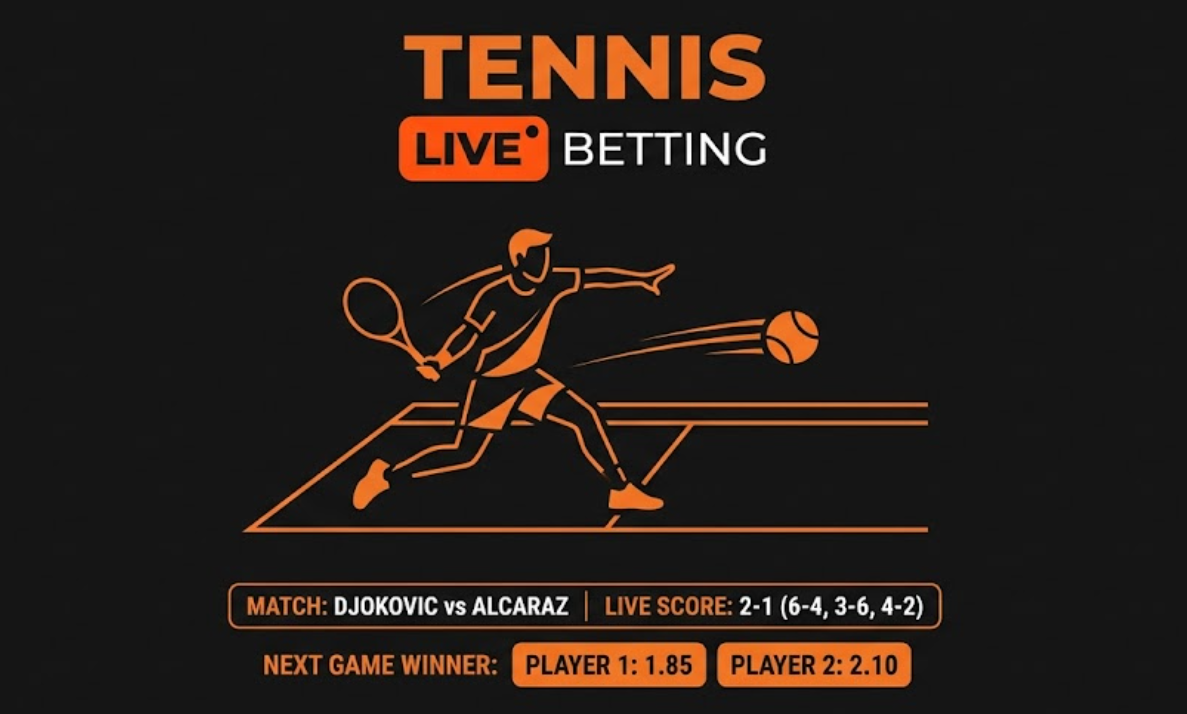
The sport’s structure creates constant wagering opportunities unlike any team competition. Matches contain dozens of decision points, each generating fresh odds and new value spots. The individual nature of competition means no teammates hide weaknesses or compensate for poor form. Every missed first serve, every double fault, every netted backhand immediately reflects in market prices. Unlike basketball where a cold shooting quarter might be masked by teammate contributions, singles competition exposes every performance fluctuation in real time. This transparency combined with the scoring system — where momentum can shift on a single point — makes this the fastest-repricing market in sports wagering.
Continuous betting opportunities 🎾
A typical three-set match contains between 150-250 individual points. Each point triggers automatic odds recalculation across game, set, and match markets. This frequency gives skilled bettors multiple entry points rather than waiting for halftime or quarter breaks. A two-hour match offers roughly 120 minutes of active wagering windows — compare this to football where perhaps 15-20 meaningful odds movements occur per game. Tennis live betting rewards attention and quick decision-making.
| Match Duration | Average Points | Odds Updates | Value Windows |
|---|---|---|---|
| 2 hours | 180 | 180+ | 25-40 |
| 3 hours | 260 | 260+ | 40-60 |
| 4+ hours | 350+ | 350+ | 60-80 |
Transparent on-court information 📊
Court broadcasts display every relevant statistic in real time. First serve percentage, winner counts, unforced errors, and break point conversions appear on screen constantly. No sport provides better real-time data access for home bettors. This transparency means you’re working with the same information as sharp bettors and bookmakers — the advantage comes from interpreting data faster and recognizing patterns that automated odds systems miss. Service game pattern analysis becomes possible when you track serve placement tendencies across multiple games.
BET NOWPlayer style impact on live bets
Different playing styles create predictable market patterns. Knowing whether you’re watching a server, baseliner, or all-court player determines which in-play markets offer value and when momentum swings typically occur. A defensive retriever grinding five-deuce games produces entirely different odds behavior than an aggressive net-rusher finishing points in three shots. Surface context amplifies style differences — a heavy topspin specialist dominates clay rallies but struggles against flat hitters on fast indoor courts, creating matchup-specific edges that generic odds often miss.
Big servers & quick games ⚡
Players like John Isner or Reilly Opelka produce rapid service games with few deuce situations. Games finish quickly, odds move fast, and break opportunities remain scarce. Service hold probability exceeds 85% for elite servers on fast surfaces — opposing break attempts fail four out of five times, making each successful break extremely significant for in-play odds.
✅ Big server market edges
- Game totals tend toward lower numbers
- Tiebreaks occur more frequently
- Break points carry premium value when they appear
❌ Avoid in big server matches
- Extended rally markets rarely pay off
- Set spread betting becomes unpredictable
Baseliners & extended rallies 🏃
Baseline grinders like Diego Schwartzman or Simona Halep create longer games with more break opportunities. These matches suit bettors who prefer analyzing fatigue patterns and momentum shifts. Rally length affects physical output dramatically — a baseline match averaging 8-shot rallies burns 40% more energy than serve-and-volley play. This fatigue factor matters increasingly as matches extend into third sets.
All-court players & unpredictability
Versatile players adapt their tactics mid-match, making them harder to read but also creating opportunities when markets lag behind style adjustments. When a player shifts from aggressive to defensive play, odds often take 2-3 games to reflect the tactical change.
🎯 Playing style determines how odds behave — know your matchup before the first serve, not after the first game.
Round-by-round live betting approach
Tournament progression changes player mentality, physical condition, and competitive pressure. Early rounds differ fundamentally from quarterfinals, which differ from finals. Physical reserves also shift dramatically — fresh legs in opening matches become heavy limbs by the second week of a Grand Slam. Prize money jumps between rounds add financial pressure that affects risk-taking behavior, with players sometimes protecting leads more conservatively as potential earnings increase exponentially.
Early round value spots 💰
First and second round matches frequently feature ranking mismatches on paper. However, several factors create in-play value in these rounds — lower-ranked players often start with less pressure, favorites sometimes lack match sharpness early in tournaments, and motivation asymmetry creates odd first-set results. Sharp bettors watch for favorites who win first sets unconvincingly. A 6-4 opening set with multiple break points saved often signals vulnerability that in-play odds don’t fully reflect.
BET NOWQuarterfinal pressure shifts
Quarterfinals mark the transition from “just making a run” to serious title contention. Lower-seeded players reaching this stage face new psychological territory. Some rise to the occasion; others tighten under unfamiliar pressure. Watch for value opportunities when underdogs lead by a set in quarterfinals — the frontrunner pressure intensifies dramatically at this stage.
Final match intensity 🏆
Finals carry unique wagering dynamics. Both players understand that only victory matters, often leading to more conservative baseline play in crucial moments. Unforced error rates typically decrease in finals compared to earlier rounds.
| Round | Average Match Length | Break Frequency | Tiebreak Rate |
|---|---|---|---|
| R1-R2 | 95 minutes | 4.2 breaks | 18% |
| QF | 110 minutes | 3.8 breaks | 22% |
| Final | 125 minutes | 3.5 breaks | 26% |
📊 Finals tend to be tighter with fewer breaks — each service game becomes more valuable for in-play wagering as tiebreak rates rise.
Critical game situations
Certain game situations create predictable psychological pressure that affects performance. The scoreboard tells only part of the story — a 4-4 game carries vastly different weight than a 2-2 game despite identical margin separation. Players serving to stay in sets face mental burdens that don’t appear in statistics but dramatically impact execution quality. Arm tightness on crucial points causes serve speed drops of 8-12 mph among even elite professionals, creating windows where break probability spikes beyond what current odds reflect.
Serving for the set 🎯
When a player serves at 5-4, holding means winning the set while losing means facing potential momentum collapse. Data shows even elite players hold serve at 5-4 only 72-78% of the time, compared to 82-86% in normal service games. This 8-10% difference represents massive value when markets don’t fully account for serving-for-the-set pressure.
BET NOWMatch point scenarios
Match points generate the highest pressure in any individual sport. Serving for the match combines two pressure types: closing pressure and service game execution pressure. Return games facing match points often see receivers swing more freely with nothing to lose. How individual players perform historically on match points varies enormously — some convert 85% of opportunities while others struggle below 50%.
Must-hold service games
After getting broken, the immediately following service game becomes critical. Players face two pressures: the fresh wound of losing serve and the knowledge that another break likely decides the set.
Schedule & timing factors
Professional tour scheduling creates predictable physical and mental advantages. Smart bettors factor these elements into in-play decisions rather than focusing solely on rankings and head-to-head records.
Back-to-back match fatigue
Players who competed the previous day carry fatigue into their next match. This effect multiplies when the prior match extended beyond two hours or involved physical baseline play. Recovery windows matter significantly.
Day vs night session patterns 🌙
Night sessions feature different conditions than day matches. Temperature drops, humidity changes, and altered ball behavior affect different player styles differently. Big servers often benefit from night conditions where balls move faster through cooler air. Player chronotypes also matter — some players perform better in afternoon heat while others thrive under lights. Historical data reveals these patterns for most touring professionals.
Time zone travel impact ✈️
US tournaments draw international players crossing multiple time zones. A European player arriving three days before a match typically adjusts adequately — arriving the day before means competing while jet-lagged. Track arrival times for international players, especially in early tournament rounds, as jet lag creates legitimate edges that rankings don’t reflect.
BET NOWRanking traps in live betting
ATP and WTA rankings reflect accumulated points over 52 weeks. Current form may differ dramatically from ranking position. Live tennis betting strategy demands looking beyond the numbers beside player names.
When rankings mislead
- Returning from injury: A top-20 player coming back after three months holds ranking points from pre-injury performance
- Surface specialists: Clay court points carrying into hard court swings
- Hot streaks not yet reflected: Recent winners whose ranking lags actual form
- Protected rankings: Injured players using frozen rankings that don’t reflect current ability
Rising players vs fading veterans 📈
Young players improving rapidly often remain undervalued in markets because their rankings reflect limited tour experience. Meanwhile, veterans ranked highly due to past achievements may be declining in real ability. This dynamic creates consistent value wagering on rising players in real-time situations where they establish early leads.
| Factor | Rising Player | Fading Veteran |
|---|---|---|
| Ranking accuracy | Understated | Overstated |
| Physical condition | Improving | Declining |
| Confidence level | Building | Protecting |
| Risk-taking | Higher | Lower |
| Market perception | Underdog | Respected |
📉 Rankings reflect the past — live form shows the present. Never let a ranking number override what you’re seeing on the court.
Protecting profits in tennis live
Market volatility cuts both ways. The same momentum swing speed that creates value opportunities in tennis live betting can erase profits within minutes. Professional bettors employ systematic approaches to protecting gains.
Partial cash-out timing 💵
Rather than binary hold-or-sell decisions, partial cash-out lets you secure some profit while maintaining exposure. This graduated approach prevents devastating late-match collapses from erasing entire profits.
Hedging in deciding sets
Third sets and fifth sets in Grand Slams reset momentum partially. A player who dominated set two may struggle in the decider. Hedging strategies involve placing smaller bets on the opponent when your original pick leads but faces a deciding set. Calculate hedge amounts to guarantee minimum profit regardless of outcome — accept reduced maximum returns in exchange for eliminated downside risk.
💵 Locking in profit beats chasing maximum returns — the graduated cash-out approach is one of the most underused edges in tennis live betting.
Live tennis data essentials
Two statistics provide the clearest window into live betting tennis dynamics. Tracking these numbers through match progression reveals performance trends that predict future results better than current score alone.
Winners-to-errors ratio 📊
This ratio compares aggressive winners to unforced errors. A ratio above 1.0 indicates a player hitting more winners than errors — generally sustainable aggression. Below 1.0 suggests either defensive play or struggling execution. Track how this ratio changes set-to-set — a player whose ratio declines from 1.3 in set one to 0.7 in set two likely faces physical or mental challenges that will affect remaining play.
BET NOWFirst serve points won
First serve points won percentage reveals serving dominance better than ace counts. Elite servers win 75-80% of first serve points. When this number drops below 65%, the server faces increasing break pressure regardless of what the scoreboard shows.
| First Serve Points Won | Interpretation | Betting Implication |
|---|---|---|
| 80%+ | Dominant serving | Expect holds, avoid break bets |
| 70-79% | Solid serving | Standard break frequency |
| 60-69% | Vulnerable | Look for break opportunities |
| Below 60% | Struggling | Strong break value exists |